
The optimal player development pathway to expertise in soccer
Evidence-based analysis and practical practices

Finding the optimal path - does it exist?
To answer such a question, it helps to investigate the work of others who have asked the same.
The performance approach (EPA) is a strategy to study elite performers that seeks to confirm retrospectively, differentiations in experts to amateurs. This leads to the idea/finding of deliberate practice (DP), which positions structured, and effortful training as a central driver toward expertise, but alone does not get to the heart of it. A missing piece is the concept of “talent”, a complex resource / potential widely socially accepted yet diversely understood. “Talent” does not go without scrutiny once taking a closer look at what underpins such a thing, with evidence of conflicting data and ideas involving genetic-environmental relations, learning, skill, physical and psychological characteristics. To further complicate things, no such topic ever unfolds in isolation or a vacuum, since soccer player pathways and associated talent development environments exist in unique socio-cultural context microsystems nested within larger scale systems which interact complexly. Such complexity influences values, processes and beliefs around coaching, coach-educating, playing, selecting/deselecting, and training.
Overall, there is little support for the possibility of an optimal pathway to soccer expertise for everyone, but there are research informed recommendations of “good practice” that appreciate the nonlinearity and inherent impossibility of expecting any predictable outcomes.
What does studying experts uncover?
Starting with a cross-sectional analysis of experts to explore what makes experts different from non-experts. An aim to try and understand the expert phenomena, and how we might reverse engineer a path to get others there. Ericsson and Smith [11] were pioneers in studying expert performance in this way. Leading us to the EPA “a three-stage approach involving: i) identifying representative tasks that capture the essence of expertise in the domain; ii) having expert (and possibly novice) performers participate in those tasks, recording the mechanisms that mediate the expert’s superior performance; and iii) tracing the acquisition of those skills and mechanisms” [13]. The EPA is a form of inductive reasoning to study experts who have achieved such a status defined by the levels they have reached in a domain, in an applied example, “elite and sub-elite soccer players are not meaningfully discriminated on nonspecific tests of visual function throughout late childhood, adolescence, or early adulthood. Instead, elite players develop superior perceptual and cognitive skills that allow them to perform more successfully in each of the respective age groups” [39]. However, to muddy the waters further, the ways that perceptual and cognitive skills are understood, tested, and observed can differ amongst approaches. A weakness in these findings [39] from an ecological perspective [16] is due to “requiring participants to undertake non-representative actions” [28] potentially as false determinants of the enhanced perceptual-motor ability they argued for. Araujo [1] suggests a lack of behavioral correspondence regarding relevant affordance selecting, promoting action fidelity, and differentiating degrees of task goal achievement, observing intentionality in real time, not as a posteriori judgement [1]. Research on whether non-representative perception tests transfer on-field found that the performance of talented soccer players, is not predictable based on performance in common set of tests of perceptual-cognitive skill [36]. The test of pattern recall appears to be driven by a different underlying process from that used when performing tests of contextual anticipation and decision making [36].
Insights from the expert performance approach, led to deeper rooted concepts that formed the deliberate practice framework, [12] which posits that “performers must be primarily motivated to engage in practice to improve performance and not for some other reason (e.g. enjoyment, social interaction)” [7]. Deliberate practice (DP) is defined retrospectively from cross-sectional studies and qualitative interviews with current experts, where more and better DP is argued as a potentially causal and cumulative resource toward becoming an expert. Upon much contemporary review, misunderstanding, and academic discourse, the underlying additive relationship (monotonic) between DP, expertise is weaker than originally proposed, involving tremendous amounts of variability in amount and effect on individuals [7, 18]. Although practicing is a statistically important fact, assumptions on the amounts, and intents of such practice are largely variable and alone hold no substantial predictive validity.
A practical example of deliberate practice effect, or the 10,000-hour rule [56] in present day is Neal Kennedy, showcasing his journey to go from amateur to national team player for the US through hard, not immediately effortful training toward and expert destination. The underdog, put on display to see if they will “make-it” by training on their own or with a specific individual coach is a story that excites many, from cinema to the hometown local here, or now on social media with the Neal Kennedy journey with 100+ million views.
An underlying force nested within concepts of becoming an expert in soccer is TALENT, “an extremely complex attribute; genetically determined, complicated in structure and subject to environmental conditions” [35]. This classic nature vs nurture debate resonates in the field, although “research consistently shows that expertise cannot be explained by genes or environments alone; instead, it reflects complex interplay between genetic propensities and environmental experiences” [30]. Further, “so far there appears to be no single gene that accounts for even a few percent of the variance in any of the athletic characteristics” [10]. “Genes are expressed across developmental time, which results in unpredictable patterns of development. This is especially true when dealing with complex outcomes like sports performance where the traits are polygenic and multi-disciplinary” [5].
Who is selected, when, and why has reached no justifiable universal consensus in the field of talent whatsoever. The relationship between strategies of best practice for talent development and predictable future expertise is an empirical mess. There are mixed findings across the board. Support for, and against early: selections, diversification, deliberate practice vs play, all have supporting and often contradictory evidence [3, 6, 8, 9, 14, 25, 29, 41].
Anyone reaching the highest levels of soccer is defying all odds, and whether any moment of their journey suggests correlation with a certain aspect of a pathway is statistically happenstance, and impossible to determine if said correlation was beneficial, or a deterrent, and what effects either type had on their path. The evidence shows that “athlete development rarely unfolds in a linear manner. It is a highly individualized process” [2]. In a recent literature review on this subject, Güllich and colleagues [20] assert “The acquisition of the highest levels of performance is characterized by prolonged, variable, and individualized developmental histories”. Evidence that early talent promotion / early specialization is sufficient for the attainment of elite performance is weak [3, 19]. To further complicate it, all processes of talent identification, selection, and promotion are constrained by club philosophies, biases, heuristics, and socially constructed effects i.e. relative age effect, attraction advantages, talent waste, etc. essentially a culmination of serendipity [4, 24, 32, 42]. “The path to expertise can emerge under multiple interacting constraints” [43], and even the ones that would be assumed as “aversive, unconventional learning contexts during development”. [43]
Mangalam [27] sums this up conceptually “any model claiming to identify the “optimal” walking pattern must arbitrarily privilege one function over others, imposing the modeler’s values rather than uncovering a natural truth”. Alicia Juarerro eloquently describes the same concept through the lens of complexity: “had different individuals acted differently, the character of the interdependencies they generated would be different. That said, drawn into a different sort of context, each of us would be different, would behave differently. The coevolution of individual and context generally, including humans and their organizations, makes each journey unique; in the process, each is individuated, uniquely so” [22].
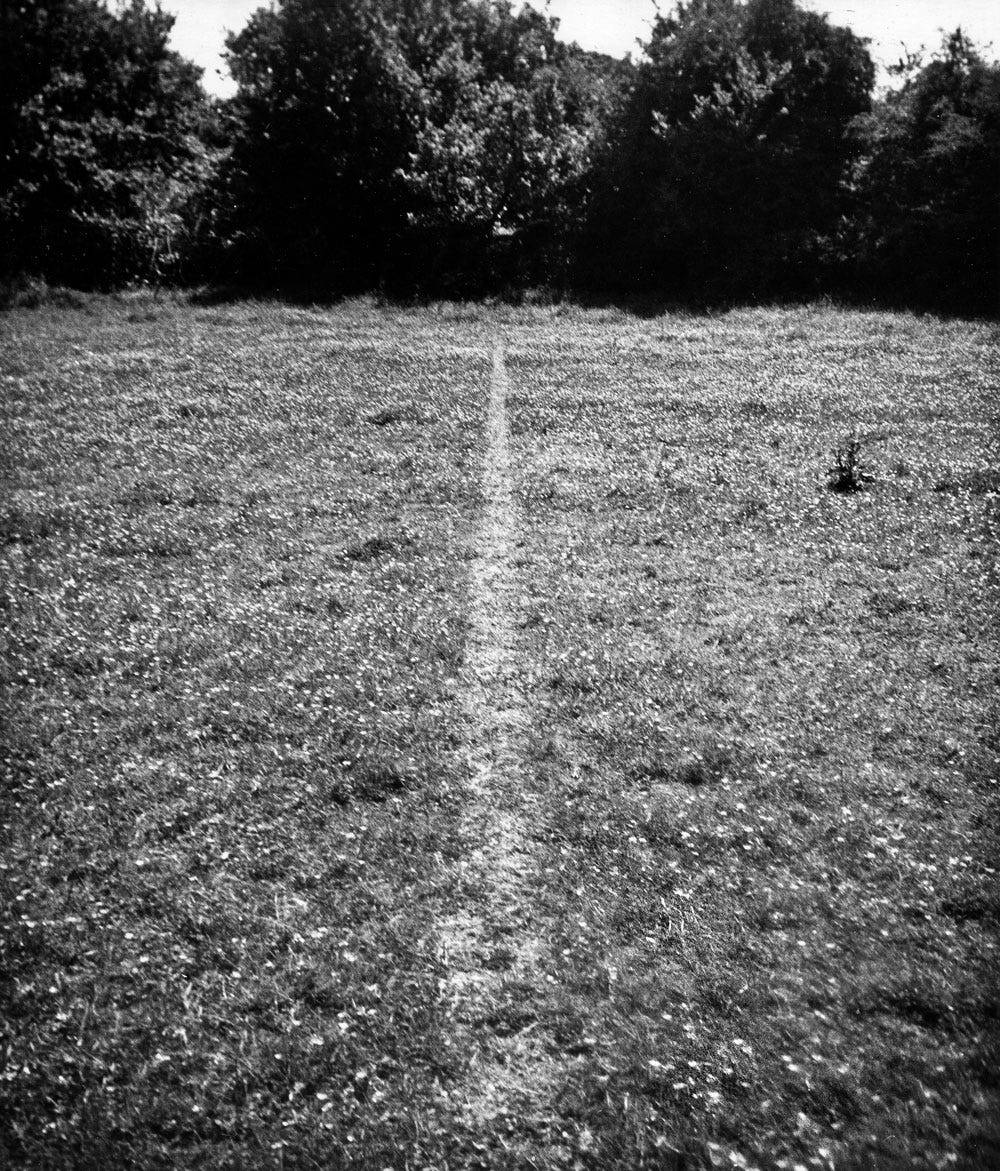
Richard Long — A Line Made by Walking, 1967
So where do we go from here?
Expertise is sociological, involving pathways and outcomes with individuals with richly diverse histories in their youth journeys, sporting backgrounds, cultural-contexts, starting points, and ways of playing the game. Talent is socialized recognition. It emerges when a performer expresses, in a sport-relevant context, an emergent relationship of “skill” between an individual and the environment they learn to live and flourish within, and that is where the expert relationship is formed between the child and the game [45].
The theoretical underpinnings I believe sufficient to study expertise in soccer – Ecological Dynamics
Markers of expertise are witnessed through skillful interaction within a socio-materially entangled landscape of affordances, or possibilities, and invitations for action [16] the environment offers to a form of life, an ecology of relations [37] which “describes the values, beliefs, traditions, customs, and behaviors that influence attitudes towards developing expertise in individuals.” [57].
Bronfenbrenner’s bioecological theory of human development helps to better conceptualize the complexity of a form of life, where “the macrosystem shapes a societal blueprint, conveying the information, ideology, and values that influence organizational structures (i.e., roles, responsibilities, tasks) and events in the embedded microsystems (i.e., classrooms and coaching sessions) where childhood development and education takes place” [37, 46].
These contextually bound “proximal processes” [46, 51] of playing, coaching, and pathways choices of selections, methods, and associated beliefs are lawfully, socio-materially, and constitutively entangled [47, 48, 49, 50].
Expertise is a skillful embodiment, an enactment, a process of learning and continually exercising a functional adaptive individual-environment relationship in a particular domain and the contexts within it. Expertise is the continued process, of deep practice, devotion, reflection, and care.
Recommendations For Soccer Player Development Environments – A growing list
1. Analyze your specific socio-cultural context with reflexive ethnographic methods, and/to cultivate a unique ATDE [58] within your form of life (Fig 1) that promotes a love of play both informally [36] and in structured training contexts. [52]
2. Establish a department of methodology, to carry out these goals adaptively and collaboratively over time [31].
3. Promote unstructured (not adult led) play environments [14, 43, 59]
4. Support players as they enter more deliberate phases, operationalizing “deliberate practice” [15].
5. Establish an inclusive community across ages, fostering important proximal role models [25, 62].
6. Focus on skill adaptation and long-term development [1, 28, 38].
7. Inclusion of psychosocial support/interventions [21, 26, 44].
8. Maintaining a flexible environment structure that allows for entry/exit as players need, with a lifespan focus [2, 44, 62] (Fig 2).
9. Provide opportunities for overall athletic development [9, 32].
10. Enable players in process focused goals. [17, 60, 61,]
11. Build positive relationships with, and collaborate with parents [24, 25].
Michael Jordan — advice to Frank Ntilikina, published in The Players’ Tribune, 2017:
“You can’t be great unless you really love the game. Once you love basketball more than anyone else in the world, then you’re willing to sacrifice. You’re willing to wake up early. You’re willing to do what it takes to be the best. But first, you have to really love it.”
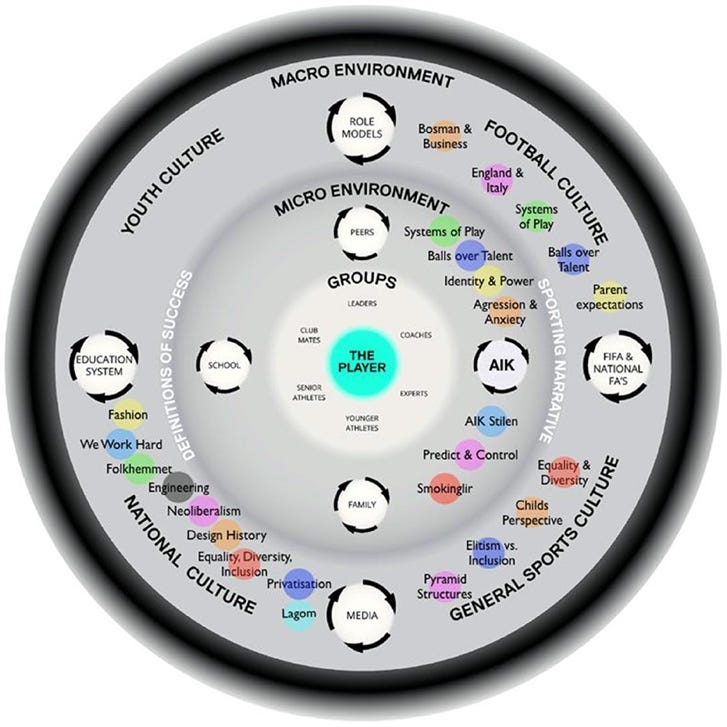
Fig 1. The football in Stockholm ATDE. Reproduced from Vaughan et al. (2022), Frontiers in Sports and Active Living, 4, Article 832111. [37]
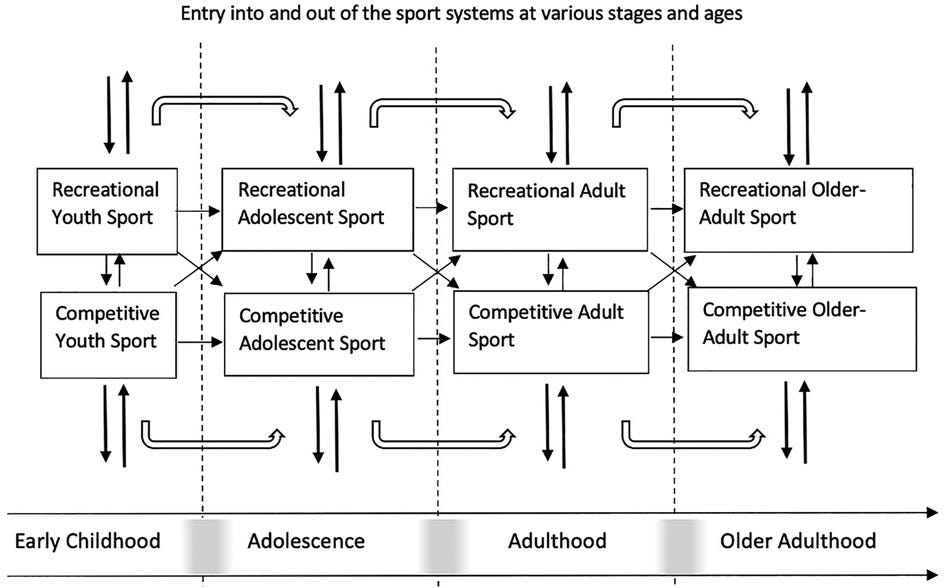
Fig 2. Overview of prominent lifespan models of athlete development. Reproduced from Baker et al. (2023), Frontiers in Sports and Active Living, 5, Article 1179767 [2]
*Ed if you are seeing this, sorry I ended with the frameworks ;)
REFERENCES - Not in Alphabetical Order at a certain point
Araújo, D., Lopes, H., Farrokh, D., & Davids, K. (2025). The ecological dynamics of cognizant action in sport. Psychology of Sport and Exercise, 80, 102935. https://doi.org/10.1016/j.psychsport.2025.102935
Baker, J., Gayman, A., & Johnston, K. (2023). Lifespan models of athlete development: What have we learned from previous attempts? Frontiers in Sports and Active Living, 5, 1179767. https://doi.org/10.3389/fspor.2023.1179767
Baker, J., Mosher, A., & Fraser-Thomas, J. (2021). Is it too early to condemn early sport specialisation? British Journal of Sports Medicine, 55(3), 179–180. https://doi.org/10.1136/bjsports-2020-102053
Baker, J., Schorer, J., & Wattie, N. (2018). Compromising talent: Issues in identifying and selecting talent in sport. Quest, 70(1), 48–63. https://doi.org/10.1080/00336297.2017.1333438
Baker, J., Wattie, N., & Schorer, J. (2019). A proposed conceptualization of talent in sport: The first step in a long and winding road. Psychology of Sport and Exercise, 43, 27–33. https://doi.org/10.1016/j.psychsport.2018.12.016
Baker, J., Wilson, S., Johnston, K., Dehghansai, N., Koenigsberg, A., De Vegt, S., & Wattie, N. (2020). Talent research in sport 1990–2018: A scoping review. Frontiers in Psychology, 11, 607710. https://doi.org/10.3389/fpsyg.2020.607710
Baker, J., & Young, B. (2014). 20 years later: Deliberate practice and the development of expertise in sport. International Review of Sport and Exercise Psychology, 7(1), 135–157. https://doi.org/10.1080/1750984X.2014.896024
Barth, M., Güllich, A., Macnamara, B. N., & Hambrick, D. Z. (2024). Quantifying the extent to which junior performance predicts senior performance in Olympic sports: A systematic review and meta-analysis. Sports Medicine, 54(1), 95–104. https://doi.org/10.1007/s40279-023-01906-0
Côté, J., & Vierimaa, M. (2014). The developmental model of sport participation: 15 years after its first conceptualization. Science & Sports, 29, S63–S69. https://doi.org/10.1016/j.scispo.2014.08.133
Ericsson, K. A., & Harwell, K. W. (2019). Deliberate practice and proposed limits on the effects of practice on the acquisition of expert performance. In K. A. Ericsson, R. R. Hoffman, A. Kozbelt, & A. M. Williams (Eds.), The Cambridge handbook of expertise and expert performance (2nd ed., pp. 687–709). Cambridge University Press.
Ericsson, K. A., & Smith, J. (1991). Prospects and limits of the empirical study of expertise: An introduction. In K. A. Ericsson & J. Smith (Eds.), Toward a general theory of expertise: Prospects and limits (pp. 1–38). Cambridge University Press.
Ericsson, K. A., Krampe, R. T., & Tesch-Römer, C. (1993). The role of deliberate practice in the acquisition of expert performance. Psychological Review, 100, 363–406.
Ford, P., Coughlan, E., & Williams, M. (2009). The expert-performance approach as a framework for understanding and enhancing coaching performance, expertise and learning. International Journal of Sports Science & Coaching, 4(3), 451–463. https://doi.org/10.1260/174795409789623919
Ford, P. R., Carling, C., Garces, M., Marques, M., Miguel, C., Farrant, A., Stenling, A., Moreno, J., Le Gall, F., Holmström, S., Salmela, J. H., & Williams, M. (2012). The developmental activities of elite soccer players aged under-16 years from seven countries. Journal of Sports Sciences, 30(15), 1653–1663. https://doi.org/10.1080/02640414.2012.701762
Ford, P. R., & Coughlan, E. K. (2019). Operationalising deliberate practice for performance improvement in sport. In N. J. Hodges & A. M. Williams (Eds.), Skill acquisition in sport (3rd ed., pp. 183–200). Routledge. https://doi.org/10.4324/9781351189750-10
Gibson, J. J. (1979). The ecological approach to visual perception. Houghton Mifflin.
Goddard, S. G., Reece, L. J., Vella, S. A., & Swann, C. (2025). Goal setting in youth sport: Are we unintentionally contributing to dropout? Br J Sports Med.
Hambrick, D. Z., Altmann, E. M., Oswald, F. L., Meinz, E. J., & Gobet, F. (2014). Facing facts about deliberate practice. Frontiers in Psychology, 5. https://doi.org/10.3389/fpsyg.2014.00751
Güllich, A., & Barth, M. (2024). Effects of early talent promotion on junior and senior performance: A systematic review and meta-analysis. Sports Medicine, 54(3), 697–710. https://doi.org/10.1007/s40279-023-01957-3
Güllich, A., Barth, M., Hambrick, D. Z., & Macnamara, B. N. (2025). Recent discoveries on the acquisition of the highest levels of human performance. Science, 390(6779), eadt7790. https://doi.org/10.1126/science.adt7790
Henriksen, K., Diment, G., & Hansen, J. (2011). Professional philosophy: Inside the delivery of sport psychology service at Team Denmark. Sport Science Review, 20(1–2), 5–21. https://doi.org/10.2478/v10237-011-0043-6
Juarrero, A. (2023). Context changes everything: How context transforms meaning and value. MIT Press.
Kite, R. J., Johnston, K., & Baker, J. (2025). What do we know about player selection in academy soccer? A narrative review. Journal of Expertise, 8(2–3), 150–178.
Kramers, S., Thrower, S. N., Steptoe, K., & Harwood, C. G. (2023). Parental strategies for supporting children’s psychosocial development within and beyond elite sport. Journal of Applied Sport Psychology, 35(3), 498–520. https://doi.org/10.1080/10413200.2022.2043486
Larsen, C. H., Alfermann, D., Henriksen, K., & Christensen, M. K. (2013). Successful talent development in soccer: The characteristics of the environment. Sport, Exercise, and Performance Psychology, 2(3), 190–206. https://doi.org/10.1037/a0031958
Larsen, C. H., Alfermann, D., Henriksen, K., & Christensen, M. K. (2014). Preparing footballers for the next step: An intervention program from an ecological perspective. The Sport Psychologist, 28(1), 91–102. https://doi.org/10.1123/tsp.2013-0015
Mangalam, M. (2025). The myth of optimality in human movement science. Neuroscience & Biobehavioral Reviews, 178, 106352. https://doi.org/10.1016/j.neubiorev.2025.106352
Phillips, E., Davids, K., Renshaw, I., & Portus, M. (2010). Expert performance in sport and the dynamics of talent development.
Platvoet, S. W. J., et al. (2023). An early start at a professional soccer academy is no guarantee of elite success. Frontiers in Sports and Active Living, 5, 1283003. https://doi.org/10.3389/fspor.2023.1283003
Plomin, R., Shakeshaft, N. G., McMillan, A., & Trzaskowski, M. (2014). Nature, nurture, and expertise. Intelligence, 45, 46–59.
Rothwell, M., Davids, K., Stone, J. A., O’Sullivan, M., Vaughan, J., Newcombe, D. J., & Shuttleworth, R. (2020). A department of methodology can coordinate transdisciplinary sport science support.
Rothwell, M., Rudd, J., & Davids, K. (2022). Integrating specificity and generality of practice to enrich children’s learning in sport. In M. Toms & R. Jeanes (Eds.), Routledge handbook of coaching children in sport (pp. 284–292). Routledge. https://doi.org/10.4324/9781003199359-31
Sarmento, H., Anguera, M. T., Pereira, A., & Araújo, D. (2018). Talent identification and development in male football: A systematic review. Sports Medicine, 48(4), 907–931. https://doi.org/10.1007/s40279-017-0851-7
Tomás, J., Araújo, D., Martinho, D., Ribeiro, J., Sousa, H., Field, A., & Sarmento, H. (2025). Barriers and facilitators in the junior-to-senior transition in male football: A scoping review. Sports, 13(12), 440. https://doi.org/10.3390/sports13120440
Tranckle, P., & Cushion, C. J. (2006). Rethinking giftedness and talent in sport. Quest, 58(2), 265–282. https://doi.org/10.1080/00336297.2006.10491883
Van Maarseveen, M. J. J., Oudejans, R. R. D., Mann, D. L., & Savelsbergh, G. J. P. (2018). Perceptual-cognitive skill and the in situ performance of soccer players. Quarterly Journal of Experimental Psychology, 71(2), 455–470. https://doi.org/10.1080/17470218.2016.1255236
Vaughan, J., Mallett, C. J., Potrac, P., Woods, C., O’Sullivan, M., & Davids, K. (2022). Social and Cultural Constraints on Football Player Development in Stockholm: Influencing Skill, Learning, and Wellbeing. Frontiers in Sports and Active Living, 4, 832111. https://doi.org/10.3389/fspor.2022.832111
Uehara, L., Davids, K., Pepping, G.-J., Gray, R., & Button, C. (2022). The role of family and football academy in developing Brazilian football expertise. International Sports Studies, 44(2), 6–21.
Ward, P., & Williams, A. M. (2003). Perceptual and cognitive skill development in soccer. Journal of Sport and Exercise Psychology, 25(1), 93–111. https://doi.org/10.1123/jsep.25.1.93
Woods, C. T., McKeown, I., Rothwell, M., Araújo, D., Robertson, S., & Davids, K. (2020). Sport practitioners as sport ecology designers: How ecological dynamics has progressively changed perceptions of skill “acquisition”. Frontiers in Psychology, 11, 654. https://doi.org/10.3389/fpsyg.2020.00654
Young, B. W., Eccles, D. W., Williams, A. M., & Baker, J. (2021). K. Anders Ericsson, deliberate practice, and sport: Contributions, collaborations, and controversies
Baker, J., & Johnston, K. (2025). Pushing your luck: On chance, serendipity, and athlete development. Sports Medicine - Open, 11(1), 144. https://doi.org/10.1186/s40798-025-00932-8
Araújo, D., Fonseca, C., Davids, K., Garganta, J., Volossovitch, A., Brandão, R., & Krebs, R. (2010). The Role of Ecological Constraints on Expertise Development.
Swainston, S. C., Wilson, M. R., & Jones, M. I. (2020). Player Experience During the Junior to Senior Transition in Professional Football: A Longitudinal Case Study. Frontiers in Psychology, 11, 1672
Araújo, D., Roquette, J., & Davids, K. (2023). Ubiquitous skill opens opportunities for talent and expertise development. Frontiers in Sports and Active Living, 5, 1181752. https://doi.org/10.3389/fspor.2023.1181752
Bronfenbrenner, U., & Morris, P. (2006). The bioecological model of human development. In W. Damon & R. M. Lerner (Eds.), Handbook of child psychology: Vol. 1. Theoretical models of human development (6th ed., pp. 793–828). New York, NY: John Wiley.
Van Dijk, L., & Rietveld, E. (2017). Foregrounding sociomaterial practice in our understanding of affordances: The skilled intentionality framework. Frontiers in Psychology, 7. https://doi.org/10.3389/fpsyg.2016.01969
Rietveld, E., & Kiverstein, J. (2014). A rich landscape of affordances. Ecological Psychology, 26(4), 325–352.
Vaughan, J., Mallett, C. J., Potrac, P., López-Felip, M. A., & Davids, K. (2021). Football, culture, skill development and sport coaching: Extending ecological approaches in athlete development using the skilled intentionality framework. Frontiers in Psychology, 12, Article 635420. https://doi.org/10.3389/fpsyg.2021.635420
Chemero, A. (2011). Radical embodied cognitive science. MIT Press.
Araújo, D., & Davids, K. (2009). Ecological approaches to cognition and action in sport and exercise: Ask not only what you do, but where you do it. International Journal of Sport Psychology, 40(1), 5–37.
O’Sullivan, M., Vaughan, J., Rumbold, J. L., & Davids, K. (2023). Utilising the learning in development research framework in a professional youth football club. Frontiers in Sports and Active Living, 5, 1169531. https://doi.org/10.3389/fspor.2023.1169531
Townsend, R. C., & Cushion, C. J. (2021). ‘Put that in your fucking research’: Reflexivity, ethnography and disability sport coaching. Qualitative Research, 21(2), 251–267. https://doi.org/10.1177/1468794120931349
Sullivan, M.O. (2026). Where Are We Now? Creativity, Agency, and Essence in Football. In L.J.T. Rasmussen & V. Richard (Eds.), The Palgrave Handbook of Creativity in Sport (Chapter 16). Palgrave Macmillan.
Woods, C.T. (2026). From Creativity to Creating: Thinking with a Processual Logic. In L.J.T. Rasmussen & V. Richard (Eds.), The Palgrave Handbook of Creativity in Sport (pp. 221–234). Springer Nature Switzerland. https://doi.org/10.1007/978-3-032-13392-2_12
Baker, J. (2022). The tyranny of talent: How it compels and limits athletic achievement… and why you should ignore it. 3SD Publishing.
Rothwell, M., Davids, K., & Stone, J. (2018). Harnessing socio-cultural constraints on athlete development to create a form of life. Journal of Expertise, 1(1), 93–103.
Henriksen, K., Stambulova, N., & Roessler, K. K. (2010). Holistic approach to athletic talent development environments: A successful sailing milieu. Psychology of Sport and Exercise, 11(3), 212–222. https://doi.org/10.1016/j.psychsport.2009.10.005
Uehara, L., Button, C., Falcous, M., & Davids, K. (2016). Contextualised skill acquisition research: A new framework to study the development of sport expertise. Physical Education and Sport Pedagogy, 21(2), 153–168. https://doi.org/10.1080/17408989.2014.924495
Martindale, R. J. J., Collins, D., & Daubney, J. (2005). Talent development: A guide for practice and research within sport. Quest, 57(4), 353–375.
Dickson, S., Nesti, M., Richardson, D., & Littlewood, M. (2026). Agreeing the optimal methods for coaching psychosocial attributes in youth soccer: An e-Delphi study. [journal needed — not visible in cache]
Larsen, Storm, Sæther, Pyrdol & Henriksen (2020). A world class academy in professional football: The case of Ajax Amsterdam. Scandinavian Journal of Sport and Exercise Psychology, 2, 33–43.